
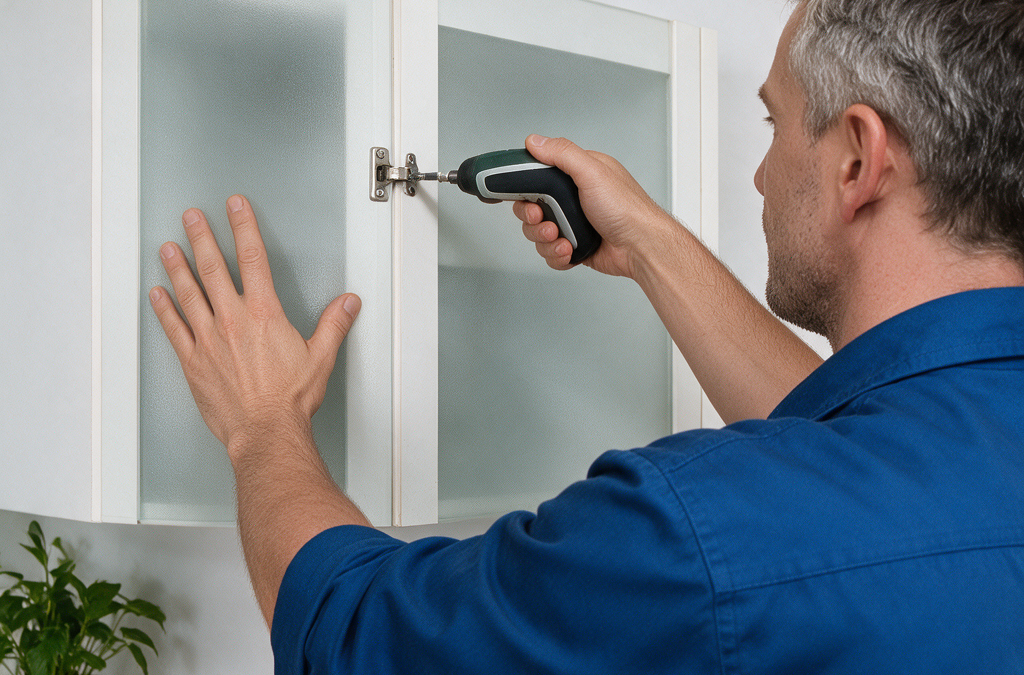
A cupboard door that rubs against its neighbour, hangs crooked or refuses to close does not necessarily need replacing. Often, the problem involves hinge adjustment, worn hardware or damaged fixing points. NexGen Tradies provides cupboard door repairs in Perth, helping homeowners restore the function of existing kitchen, bathroom, laundry and storage cupboards.
The right repair depends on what is causing the movement. Adjusting a sound hinge may correct alignment, while a damaged hinge or weakened mounting point needs a different solution.
The Short Version
Crooked, rubbing or loose cupboard doors can often be repaired without replacing the cabinet. The key is checking the hinges, fixing points and door condition before making adjustments. Replacement may be appropriate when hardware has failed or the door is damaged, provided suitable components can be fitted.
Why Has Your Cupboard Door Dropped?
Cupboard doors rely on hinges and secure mounting points to hold their position. When one part loosens or deteriorates, the door can move out of alignment.
Common causes include:
- Loose hinge screws
- Worn or damaged hinge mechanisms
- Screw holes that no longer hold securely
- Damaged material around the mounting plate
- A loose hinge connection on the door
- Swelling or distortion caused by moisture
- Movement or damage within the cabinet itself
A small change at a hinge can create a noticeable gap at the opposite edge of the door. That is why a door may appear badly crooked even when the underlying issue is localised.
However, repeatedly adjusting the hinges will not resolve every problem. The repair needs to address the cause of the movement.
What Do the Symptoms Tell You?
The way a door behaves can help explain what needs checking, although an inspection is needed to confirm the cause.
| What you notice | What may need checking |
|---|---|
| Door rubs against the neighbouring door | Side-to-side alignment, hinge condition and cabinet position |
| Door hangs lower on one side | Loose fixings, hinge wear or damaged mounting points |
| Door will not close fully | Obstructions, hinge adjustment, hardware damage or door distortion |
| Door closes but sits unevenly | Hinge depth adjustment and door condition |
| Hinge screws repeatedly loosen | Screw holes and the surrounding cabinet material |
| Door suddenly feels loose | Hinge attachment, mounting plate and fixing-point damage |
Before assuming the hardware has failed, check whether something inside the cupboard is blocking the door. A protruding saucepan handle or overfilled shelf can sometimes explain a closing problem.
If the door is loose or pulling away, stop using it until it has been assessed.
When Is Hinge Adjustment Enough?
Adjustment may be enough when the hinges are serviceable, their fixings are secure and the door remains in good condition.
Many concealed cupboard hinges allow adjustments that change the door’s position. Depending on the hinge design, these may alter height, sideways alignment or how closely the door sits against the cabinet.
The aim is to achieve even gaps and smooth operation without making the door catch elsewhere.
Adjustment is less likely to provide a lasting result when:
- The hinge mechanism is damaged
- Screws turn without tightening
- The mounting plate moves against the cabinet
- Material around the fixings is breaking away
- The door has swollen or changed shape
These conditions should be assessed before further adjustment.
When Should Cupboard Hinges Be Replaced?
Hinge replacement may be appropriate when the mechanism is worn, bent, broken or no longer operates correctly.
Choosing a replacement involves more than finding something that looks similar. Cupboard hinges vary in their mounting arrangements, opening angles and how they position the door relative to the cabinet.
Existing holes and clearances also influence what can be fitted.
Soft-close hinges may be an option for some cupboards, but compatibility needs checking first. An upgrade should suit the existing door and cabinet construction.
NexGen Tradies can assess troublesome cupboard doors and discuss suitable repair or replacement options for the existing installation.
Why Do Hinge Screws Keep Coming Loose?
A screw needs sound material around it to hold securely. If the hole has become enlarged or the surrounding panel has deteriorated, tightening the screw again may only provide temporary improvement.
This distinction matters because a new hinge still needs a secure mounting point.
The appropriate repair depends on the panel material, the extent of the damage and the loads at that fixing. A localised repair may be possible, while more extensive deterioration can require replacement of an affected component.
Avoid repeatedly forcing a loose screw or fitting a longer screw without checking what is behind the panel. That can create additional damage without solving the original problem.
Does Moisture Change the Repair Options?
Moisture can affect cupboard doors and hinge fixing points, particularly around kitchen sinks, bathroom vanities and laundry areas.
Look for swollen edges, lifting finishes, softened panels or deterioration near hinges. These signs suggest that alignment may be only part of the problem.
The moisture source should be investigated before repairing the affected cupboard. Plumbing leaks need attention from an appropriately licensed plumber.
Once the source has been addressed, the door and supporting panels can be assessed. Adjusting hinges will not restore the original shape or strength of badly swollen material.
Repair the Door or Replace It?
Retaining the existing door can make sense when it remains sound and the problem is limited to hardware or fixings. It also avoids the challenge of matching an older finish.
Replacement may be more practical when the door is cracked, extensively swollen or damaged around its hinge attachment.
Before proceeding, consider:
- Whether the existing door can be repaired securely
- Whether a compatible replacement is available
- How closely the colour, profile and finish can be matched
- Whether nearby doors have similar damage
- Whether the cabinet itself remains serviceable
One troublesome door does not automatically justify replacing every cupboard. Equally, repairing hardware on a badly deteriorated door may not deliver a satisfactory result.
How to Prepare for Cupboard Door Repairs in Perth
Clear information helps the repairer understand the problem before visiting.
1. Identify which doors need attention
Check the kitchen, bathroom, laundry and other storage cupboards. Note which doors rub, drop, fail to close or feel loose.
2. Take useful photographs
Photograph the closed doors from the front, then take close-ups of the hinges and any damaged fixing points.
3. Describe previous repairs
Mention whether hinges have been adjusted or replaced before, and whether screws keep loosening in the same place.
4. Explain your preferred outcome
Let NexGen know whether you want the existing door repaired, damaged hardware replaced or a possible soft-close upgrade assessed.
5. Clear the working area
Remove items around the hinges and provide access to the affected cupboards. Keep any detached hardware available for inspection.
Get Your Cupboard Doors Working Smoothly Again
A cupboard door should open, close and stay securely in position. If yours needs lifting into place or catches every time you use it, an assessment can establish what needs attention.
NexGen Tradies helps Perth homeowners with existing cupboard repairs, restoration and replacement components where appropriate.
Contact NexGen Tradies to discuss your cupboard doors, hinges and alignment problems.
Frequently Asked Questions
Can one cupboard hinge be replaced without changing all the hinges?
Sometimes. A compatible individual hinge may be available, but the remaining hinges should also be checked for wear and suitable operation.
Why does my cupboard door drop again after being adjusted?
Repeated movement can indicate loose fixings, worn hinges or damaged material around the mounting points. Adjustment alone may not address the underlying cause.
Can soft-close hinges be added to old cupboards?
Some existing cupboards can accommodate compatible soft-close hinges. The door, cabinet construction, mounting arrangement and available clearances need checking first.
Will a replacement cupboard door match the existing kitchen?
A close match may be possible, but an exact match is not always available. Older finishes can change colour, and the original door profile or product may have been discontinued.
Does NexGen Tradies repair cupboard doors outside the kitchen?
Yes. NexGen Tradies can assess existing cupboard doors and hinges in bathrooms, laundries and other home storage areas, as well as kitchens.
Recent Comments